
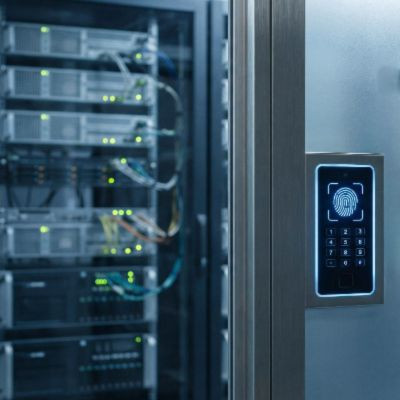
Small businesses invest thousands of dollars into sophisticated firewalls, email filters, and software protection to keep hackers out of their networks. However, many of those same organizations leave their physical server closets completely unlocked, or they locate their main network hardware in shared spaces like copy rooms.

PCSOFT Blog
Technology is a tool meant to help you do more. It should be the wind in your sails, but the same tools are now being used to build something truly unsettling: the deepfake.
We have entered an era where you cannot necessarily trust your eyes or ears during a business call. This isn't about celebrity parodies anymore; it is being weaponized to bypass security and drain bank accounts by making a lie look and sound like the absolute truth.
Cybersecurity has gotten more complex than ever, with many of the old standbys being rendered obsolete in comparison to the threats they are meant to prevent. Pairing that with the fact that many attacks are waged against small and medium-sized businesses, which often lack proper protections, makes the risk clear.
That said, you don’t have to accept these risks. Instead, you can implement tools like endpoint detection and response.
Technology is intended to be a resource for productivity. Unfortunately, malicious actors use those same advancements to create deepfakes. We have entered a period where visual and auditory information during business calls is no longer inherently trustworthy. These tools are being used to bypass security protocols and access corporate funds.
For years, the cybersecurity industry has coasted on the perception that zero-day vulnerabilities (bugs in software that the developers were not yet aware of) were not easy to find… but on April 6th, 2026, this perception shifted completely as Anthropic’s Claude Mythos AI model proved it very, very wrong.
Today’s threats are no longer the bugs we know about. They’re the thousands of previously unknown vulnerabilities that AI can identify (and weaponize) in mere moments.
Modern gadgets make running a business easier. From smart thermostats and lightbulbs to connected coffee machines, the Internet of Things (IoT) brings a lot of convenience to the workplace. However, because these devices are built for speed and low cost, they often skip the security features your business actually needs.
Essentially every smart device in your office is a potential digital back door for hackers. Let’s take a look at how IoT—as helpful as it can be—can also be a big problem.
When a workforce spans multiple geographic regions, the network transitions from a standard utility to the company’s core nervous system. If the architecture is fragmented, the business becomes latent. From a systems engineering perspective, expansion requires a shift toward a resilient, software-defined framework.
Here is the technical breakdown of the non-negotiables for a multi-site rollout.
The scariest threats out there are the ones that can crack your network without you even realizing it. That’s right, they’re using stolen credentials that they tricked your employees into handing over through a phishing attack. The good news, though, is that a simple multi-factor authentication solution (MFA) can be a significant step forward for your network security, and the simple act of having one makes your business much safer and less prone to cybersecurity breaches.
If you haven’t yet implemented MFA, here are three logical steps you can take to move in the right direction.
Let’s assume that, as a responsible business owner, you’ve established standard operating procedures for your employees to follow—including the tools they can officially use in the course of their tasks. That said, there is always the chance that someone encountered an issue and independently investigated and “fixed” it.
If anyone is using an unapproved tool or an external account to access and manipulate your business data, you have a problem… a problem known as shadow IT.
We see the endpoint—that includes every laptop, desktop, server, mobile device, and IoT gadget connected to your network—as the front line of your defense. Failing to secure every single one of these points is not just a risk; it's an invitation. You need to identify all the endpoints on your network and work to secure them. Here’s why, and how.
Technology has dramatically reshaped the way we work, with remote teams becoming not just a convenience but often a strategic imperative. With every door that opens, however, a new set of challenges emerges, particularly concerning the often-underestimated cornerstone of remote operations, the security of your systems and data.
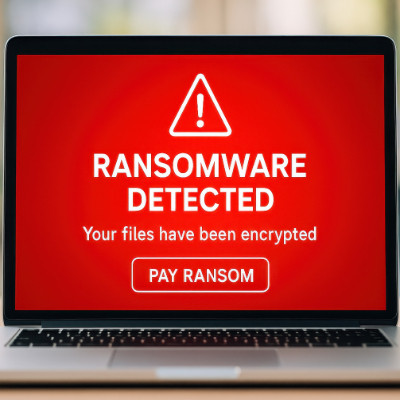
There is a seemingly infinite number of cybersecurity threats out there, but there are few threats more dangerous than ransomware. If a business hasn’t taken precautions against it, ransomware can (and will) find ways to extort money, hold data hostage, and threaten that organization’s continuity. Today, we want to cover what ransomware does, what you need to do to prevent it, and what to do if you’re attacked.
You've heard the saying, "A man's home is his castle." When it comes to your business, that comparison is even more fitting. Your business is your livelihood, your stronghold, and it deserves the strongest defenses.
Just like a medieval castle was built to keep threats out, your business' security needs to have an all-encompassing strategy. That’s why it is absolutely necessary to implement cybersecurity measures that serve the same protective purpose for your business and its network.
Cybersecurity isn’t the most fun thing to talk about, but it’s still important. This is especially for your employees who are on the front lines, the most likely folks to encounter threats during their day-to-day tasks. Today, we want to cover how your business can build better cybersecurity training practices that can keep your business secure for the long haul.
Data breaches can be a death blow for the small business. In addition to the financial ramifications of such events, they also cost a whole lot in reputational damage and organizational inefficiency. It’s pretty important for personal and organizational security for people to know that there are a few simple things you can do to help keep digital assets secure.
Businesses everywhere are adding smart devices to their IT, and for good reason. They offer convenience and efficiency but can pose a significant network security risk. These devices, part of the Internet of Things (IoT), often lack robust security features. This makes them an attractive target for cybercriminals.
In today’s world of perpetual security breaches and cyberattacks, it’s no surprise that the greatest response to such threats is to actively prevent them from harming your organization in the first place. One key tool in this effort is an endpoint detection and response (EDR) solution. With endpoint protection on your business’ side, you can leverage a robust and powerful security solution to handle a significant portion of your network security.
Network security is an incredibly nuanced topic with a lot of specifics that must be addressed. Still, today, we want to give you some actionable items that you can use to take an active role in improving network security for your business. Let’s dig into some of the essential dos and don’ts of network security for small businesses.
Remember the era when antivirus software, like most computer programs, came packaged in hefty textbook-sized boxes on store shelves? Fortunately, those days are over. Today, there are a myriad of antivirus options available with a very basic Google search. Having so many options can overwhelm someone looking for basic protection for themselves, so today we thought we would look at free antivirus and whether or not it can be an option.